


One of the main challenges companies face when protecting their sensitive data is finding the right tools for the job, even for a common tool like a firewall (sometimes called a network firewall), many companies may not have a clear idea of how to find the right firewall for their needs.
A firewall can be categorized as a system designed to prevent unauthorized access to a private network, in the form of hardware or software, or a combination of both, by preventing unauthorized Internet users from accessing private networks connected to the network, especially intranets.
All messages entering or leaving the network must pass through the firewall, which examines each message and blocks those that do not meet the specified security criteria, where its main objective is to block malicious traffic requests and data packets while allowing legitimate traffic.
Firewall Types
Packet Filtering Firewall
As the most “basic” and oldest type of firewall architecture, packet filtering firewalls basically create a checkpoint on a router or traffic switch.
The firewall performs a simple check of data packets entering through the router, inspecting information such as the destination and source IP address, packet type, port number, and other surface-level information without opening the packet to inspect its contents.
If the packet of information does not pass inspection, it is discarded.
They are not resource-intensive, i.e., they do not have a large impact on system performance and are relatively simple.
Circuit-level gateways
Quickly approves or denies traffic without consuming significant computing resources, circuit-level gateways work by checking the Transmission Control Protocol (TCP) link protocol. This TCP link protocol check ensures the legitimacy of each session.
It’s worth mentioning that these firewalls don’t check the packet itself, so if a packet contained malware, but had the correct TCP handshake, it would pass immediately. That’s why circuit-level gateways alone are not enough to protect the business.
Stateful inspection firewall
These firewalls intertwine packet inspection technology and TCP link protocol verification creating a more efficient level of protection, putting pressure on computing resources, slowing down the transfer of legitimate packets compared to other solutions.
Application Gateway or Proxy Gateway Firewalls
They filter incoming traffic between the network and the traffic source, hence the name “application-level gateway”. These firewalls are delivered through a cloud-based solution or other proxy appliance.
It establishes a connection to the source of the traffic and inspects the incoming data packet, performing inspections within the contents of the data packet to verify that it does not contain malware. Creates an additional layer of separation between the “client” (the system where the packet originated) and the individual devices on your network to provide additional anonymity and protection for your network.
Next-Generation Firewall
Some aspects of a next-generation firewall include:
- Deep packet inspection (verification of the actual content of the data packet).
- TCP link protocol checks.
- Surface-level packet inspection.
They may also include other technologies, such as intrusion prevention systems (IPS) that work to automatically stop attacks against your network.
Software firewall
Often very useful for creating a defense in depth by isolating individual network endpoints from each other.
However, maintaining individual software firewalls on different devices can be difficult and time-consuming. In addition, not all devices on a network can be supported by a single software firewall, which can mean having to use several different software firewalls to cover each asset.
Hardware firewall
These firewalls implement a physical device that acts as a traffic router by intercepting data packets and traffic requests before they connect to network servers, excelling in perimeter security by ensuring that malicious traffic from outside the network is intercepted before the company’s network endpoints are exposed to great risk.
Cloud Firewall or Firewall as a Service (FaaS)
They are very easy to scale with your organization. As your needs grow, you can add additional capacity to the cloud server to filter larger traffic loads, excelling in perimeter security. Sometimes a cloud server is often used in a proxy firewall configuration.
Benefits of using a Firewall on your computer
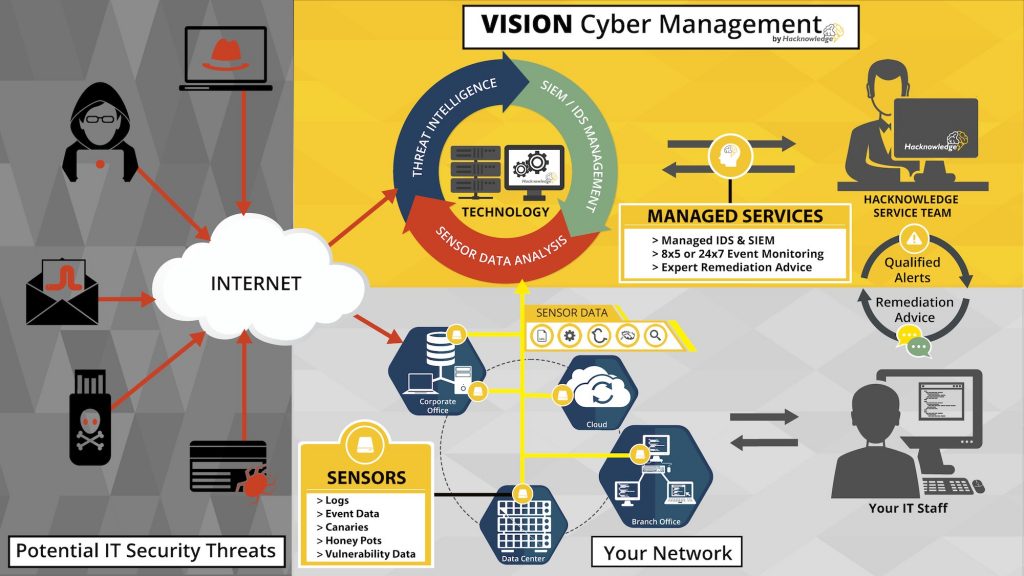
A firewall is used to protect your devices or PC from the dangers of malware. A current case is when you have an online business, data is exchanged between your computers and routers, and a firewall monitors this data to check if it is secure, preventing someone from trying to take control of your business remotely. That’s why most online entrepreneurs are recommended to buy a firewall because it will have remote access disabled, thus preventing hackers from entering your network.
Monitor your network traffic
You must understand that information is sent across networks in packets. Therefore, the firewall investigates to determine if the information contained is dangerous to the system.
Stops keyloggers
Having firewall security will help reduce the risk of keyloggers trying to monitor your activities. A keylogger is a software that most cybercriminals try to put on your computer so they can target your actions.
Enforce policies
Firewalls allow most users to enforce policies by creating their own specific rules.
Limitations of Firewalls
A firewall is designed to address issues of data integrity or traffic authentication and the confidentiality of your internal network. However, firewalls have some limitations:
- They cannot prevent users or attackers with modems from entering or leaving the internal network.
- They cannot prevent password misuse.
- Firewalls are ineffective against social engineering.
- They can’t prevent internal users from accessing websites with malicious code.
- They can’t protect you when your security policy is too weak.
With these points and trends in mind, we believe that any enterprise should implement a risk-based security approach, where the firewall generates automation by managing certain identities, in the hack itself.
Preventing any access to users’ identities will prevent illicit activity by those who want to capitalize on their findings, such as obtaining names, email addresses, credit cards, and making money from such data.
Wow, this article on cyber security solutions for threat detection was mind-blowing! Who knew firewalls could be so cool?! #NerdingOut
I know, right?! Firewalls are like the superheroes of the digital world, protecting us from all those sneaky hackers. It’s amazing how technology keeps evolving to keep us safe. Stay nerdy and stay safe! #GeekingTogether
“Guys, can we take a moment to appreciate how firewalls protect our computers from sneaky hackers? 🙌🔥 #CyberSecuritySaviors”
Are you serious? Firewalls are just one layer of defense against hackers. There’s so much more to cybersecurity than that. Don’t oversimplify it. #GetInformed
“Hey folks, after reading this article on cyber security solutions, I can’t help but wonder… Is it just me or do firewalls sometimes feel like the bouncers at a club? 🕺💃 They keep the bad guys out, but what if they accidentally turn away the good ones too? 🤔 Curious to hear your thoughts!”
I totally get what you mean! Firewalls can be a double-edged sword. It’s like having a strict bouncer who might occasionally mistake a good person for a troublemaker. But hey, better safe than sorry, right? What do you guys think?
“Firewalls are like the bouncers of the internet, keeping the bad guys out. Thank goodness for cyber security!”
Wow, these cyber security solutions are mind-blowing! Who knew there were so many types of firewalls? #StayingProtected
I know, right? It’s crazy to think how vulnerable we’ve been all this time. But hey, better late than never, huh? Time to step up our game and keep those hackers at bay! #StaySafe #CyberSecurity
“Who needs a firewall anyway? I’ll just let hackers have a field day with my personal info!”
“Anyone else think firewalls are just glorified digital bouncers? I mean, do they really keep us safe from all the cyber threats out there?”
Nah, firewalls are like flimsy umbrellas in a hurricane. They give a false sense of security while the real threats sneak in through other doors. Time to step up our game and invest in more robust cybersecurity measures. Stay vigilant, folks!
I can’t believe they didn’t mention the importance of having a pet dragon for cyber security! 🐉🔥
“Who needs a firewall when you can just throw your computer out the window? #UnconventionalSecurityMeasures”