


Have you ever wondered if ADA compliance is necessary for websites? In today’s digital age, websites play a crucial role in providing information and services to a wide range of users. With the growing importance of accessibility, ensuring that websites are accessible to individuals with disabilities has become a vital consideration. This article explores the question of whether ADA compliance is mandatory for websites, shedding light on its significance and potential implications for businesses and individuals alike.
Understanding ADA Compliance
Definition of ADA Compliance
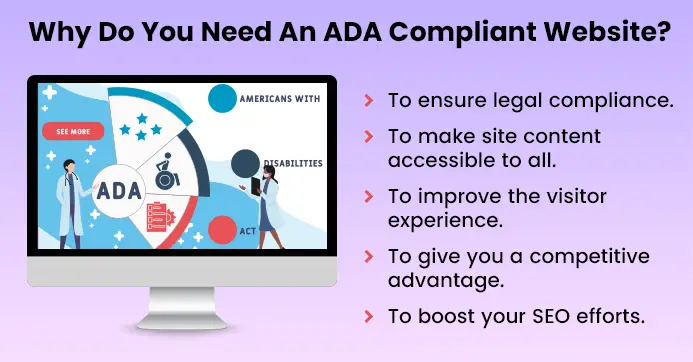
ADA stands for the Americans with Disabilities Act, a comprehensive civil rights law that prohibits discrimination against individuals with disabilities. ADA compliance refers to ensuring that websites and digital content are accessible to all users, including those with disabilities. This means that websites should be designed and developed in a way that accommodates various disabilities, enabling people to have equal access to information and services online.
Brief History of ADA Compliance
The Americans with Disabilities Act was signed into law in 1990 by President George H.W. Bush. The primary purpose of the ADA is to provide equal opportunities and eliminate barriers faced by individuals with disabilities in various aspects of public life, including employment, transportation, and access to public facilities. As technology advanced, the need for ADA compliance in digital spaces, such as websites, became apparent. The Web Content Accessibility Guidelines (WCAG) were developed to provide standards for making websites accessible, and they are widely recognized as the benchmark for ADA compliance.
The Importance of ADA Compliance for Websites
Making websites accessible to all users
One of the key reasons for implementing ADA compliance on websites is to make them accessible to all users, regardless of their disabilities. By ensuring that websites are designed in accordance with accessibility guidelines, individuals with visual impairments, hearing impairments, and other disabilities can navigate and interact with the website effectively. This inclusivity promotes equal access to information, services, and opportunities, fostering a more inclusive and equitable online environment.
Expansion of business potential
By making your website ADA compliant, you open up your business to a wider audience. According to the World Health Organization, over 1 billion people worldwide have some form of disability. By catering to their needs, you tap into a significant market segment that might have been previously overlooked. An accessible website can attract more customers, increase engagement, and potentially drive more conversions. Accessibility is not only a legal and ethical obligation but also a smart business move.
Improving SEO efforts
ADA compliance and search engine optimization (SEO) go hand in hand. When websites adhere to accessibility guidelines, they provide a better user experience, which search engines prioritize. Search engines like Google consider user experience as a crucial ranking factor, and websites that are accessible and user-friendly tend to rank higher in search results. By improving your website’s accessibility, you can enhance its visibility, reach a wider audience, and improve your overall SEO efforts.
Building a positive reputation
Maintaining ADA compliance demonstrates your commitment to inclusivity and accessibility, which builds a positive reputation for your brand. By providing equal access to your website, you send a strong message that you value all users, including those with disabilities. This commitment to accessibility can enhance your brand’s reputation, foster customer loyalty, and attract positive word-of-mouth recommendations. Furthermore, being known as an inclusive and accessible brand can differentiate you from competitors and help you stand out in the market.
Legal Necessity of ADA Compliance for Websites
Is ADA compliance legally mandatory for websites?
The legal requirement of ADA compliance for websites is a complex and evolving matter. While the ADA itself does not explicitly mention websites or digital content, the US Department of Justice has taken the position that websites of businesses open to the public should be accessible to individuals with disabilities. Additionally, courts have ruled in favor of ADA compliance for websites in various cases. The lack of explicit regulations has led to ongoing debates and lawsuits, making it important for businesses to prioritize accessibility to mitigate legal risks.
Understanding Section 508
Section 508 is an amendment to the Rehabilitation Act of 1973 that requires federal agencies to make their electronic and information technology accessible to individuals with disabilities. Although Section 508 specifically applies to federal agencies, it has had a significant impact on the accessibility standards adopted by various organizations and businesses. Adhering to Section 508 guidelines is often considered a best practice for website accessibility, even for entities not directly mandated by the law.
Potential repercussions for non-compliance
Non-compliance with ADA accessibility guidelines can expose businesses to various risks and legal repercussions. Individuals with disabilities may file complaints or lawsuits against inaccessible websites, alleging discrimination. Such lawsuits can result in financial penalties, legal fees, negative publicity, and damage to the brand’s reputation. Moreover, businesses that fail to comply with ADA accessibility requirements may lose out on government contracts or face legal investigations. Overall, the potential consequences of non-compliance make it essential for businesses to prioritize ADA compliance for their websites.
Website Elements and ADA Compliance
Accessible website design
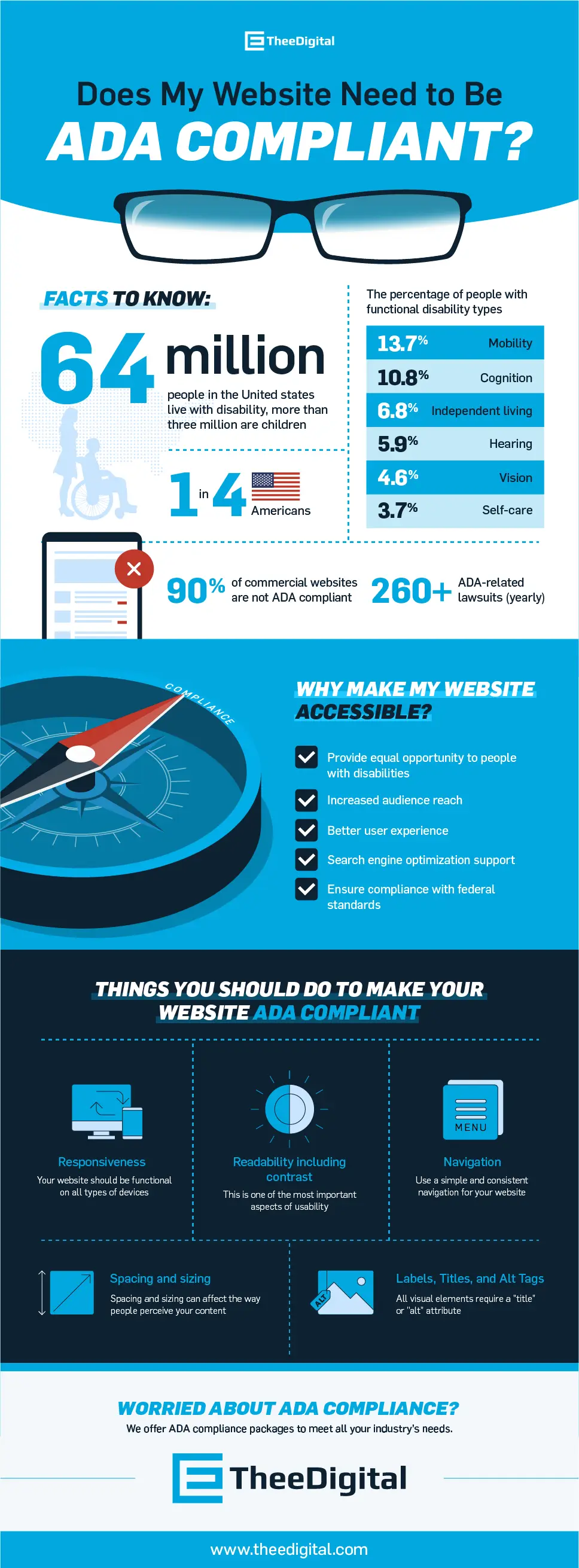
Implementing an accessible website design is the foundation of ADA compliance. This involves ensuring that the website interface, layout, and structure are optimized for users with disabilities. Clear and consistent navigation, intuitive organization, and easily readable text are crucial elements for individuals with visual impairments. Websites should also consider color contrast, font sizes, and reasonable time limits for content consumption to cater to users with low vision or cognitive disabilities.
Many individuals with disabilities rely on keyboard navigation to access and interact with websites. ADA compliant websites must enable users to navigate through the website using only keyboard inputs. This means that all interactive elements, such as buttons and links, should be easily accessible and operable through keyboard commands. Proper focus indicators and a logical tab order enhance the experience for keyboard-only users, ensuring they can navigate through the website without any barriers.
Captioning and other audio requirements
For individuals with hearing impairments, captions and transcripts are essential for accessing audio content. ADA compliant websites should provide closed captions for videos and audio content, enabling deaf or hard-of-hearing users to understand the information presented. Transcripts should also be provided for podcasts or other audio-only content. Additionally, websites should ensure that any audio or video content is compatible with assistive technologies, such as screen readers, to accommodate users with disabilities.
Text Alternatives
Images play a significant role in website design and content, but they can pose challenges for individuals with visual impairments. ADA compliant websites should provide alternative text descriptions, known as alt text, for images. Alt text describes the content or purpose of an image, allowing screen readers to convey the information to visually impaired users. By providing descriptive alt text, websites ensure that individuals with visual disabilities can understand the context and meaning of images, enhancing their overall website experience.
Guidelines to Make Your Website ADA Compliant
Following the Web Content Accessibility Guidelines (WCAG)
The Web Content Accessibility Guidelines (WCAG), developed by the World Wide Web Consortium (W3C), provide detailed guidance on making websites accessible. WCAG provides three levels of accessibility (A, AA, and AAA) and covers various aspects of website design, content, and functionality. By following the WCAG guidelines, businesses can ensure that their websites meet recognized industry standards for accessibility. These guidelines address key considerations such as text alternatives, keyboard navigation, color contrast, and more.
Employing ADA compliant plugins
Website owners can enhance ADA compliance by using plugins and tools specifically designed to improve accessibility. These plugins often provide features such as text-to-speech capabilities, resizable text, keyboard navigation enhancements, and more. However, it is important to research and select plugins that are reputable, regularly updated, and align with established accessibility guidelines. Employing ADA compliant plugins can simplify the process of achieving accessibility and ensure ongoing compliance as website technology evolves.
Using accessibility testing tools
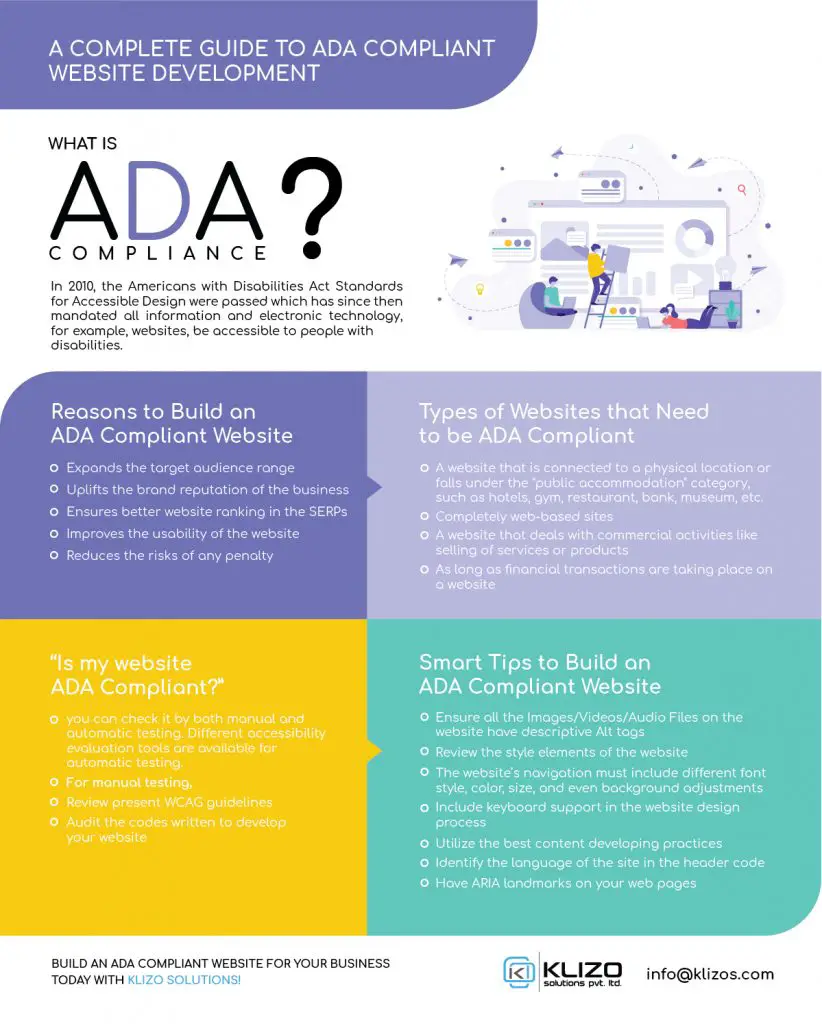
Testing the accessibility of your website is crucial to ensure compliance. Various accessibility testing tools are available online that can evaluate your website for potential issues and provide recommendations for improvement. These tools are designed to identify accessibility barriers, such as missing alt text, improper heading structure, or lack of keyboard accessibility. By regularly utilizing these testing tools, website owners can identify and address accessibility issues promptly, maintaining compliance and providing an inclusive user experience.
Benefits of Meeting ADA Compliance for Websites
Enhancing user experience
ADA compliance directly contributes to improving the user experience for all website visitors. By implementing accessibility features, individuals with disabilities can navigate, understand, and interact with the website seamlessly. However, the benefits of enhanced user experience extend beyond users with disabilities. Accessible websites often have clear navigation, well-organized content, and optimized multimedia elements, resulting in a better overall experience for all users, regardless of their abilities.
Boosting brand reputation and credibility
ADA compliance sends a clear message about a business’s commitment to inclusivity and accessibility. By proactively meeting ADA standards, businesses showcase their dedication to serving all customers, which can enhance their brand reputation and credibility. Demonstrating inclusivity can foster customer loyalty, attract new customers, and generate positive word-of-mouth recommendations within both the disability community and the general public. In an era where social responsibility is highly valued, being known as an ADA compliant brand can provide a competitive edge.
Potential increase in website traffic and conversions
By implementing ADA compliance, businesses can tap into a larger audience that includes individuals with disabilities. This expanded reach can potentially increase website traffic and engagement. Furthermore, when users have a positive experience on an accessible website, they are more likely to stay longer, explore further, and convert into customers. An inclusive and user-friendly website can drive more conversions, ultimately contributing to the growth and success of the business.
Reducing legal risks
Meeting ADA compliance standards can significantly reduce legal risks and associated costs for businesses. By proactively addressing accessibility barriers, businesses mitigate the risk of complaints, lawsuits, and legal action. By implementing ADA-compliant practices, businesses demonstrate a commitment to accessibility, which can provide a solid defense in case of legal disputes. Reducing legal risks not only saves businesses from potential financial losses but also allows them to focus on their core operations and long-term growth.
Impact of Non-compliance on Businesses
Potential lawsuits
Non-compliance with ADA accessibility requirements can expose businesses to the risk of lawsuits filed by individuals with disabilities. Such lawsuits can result in significant legal expenses, including attorney fees and settlements or judgments if found liable. Legal processes can be time-consuming, diverting resources and attention away from core business operations. Moreover, lawsuits and negative publicity can harm a brand’s reputation, potentially leading to a loss of customers and business opportunities.
Loss of reputation
Failing to meet ADA compliance standards can tarnish a business’s reputation and credibility. In an age where online presence and user experiences are crucial, inaccessible websites can generate negative feedback and reviews. This negative perception can spread quickly through social media and online forums, impacting the brand’s image. Losing the trust and respect of customers, especially those with disabilities, can be difficult to recover from and may hinder future growth and success.
Reduction in customer base
Inaccessible websites limit access to information and services for individuals with disabilities. When potential customers encounter barriers to accessing a website, they are more likely to seek alternative options. This loss of potential customers directly impacts a business’s revenue and growth. By not prioritizing ADA compliance, businesses risk alienating a significant segment of the population and losing out on valuable opportunities to serve all customers.
Examples of ADA Compliant and Non-compliant Websites
Notable ADA compliance lawsuits
Several high-profile lawsuits have brought attention to the importance of ADA compliance for websites. In the landmark case of National Federation of the Blind v. Target Corporation, the court ruled that Target’s website violated the ADA by not being accessible to individuals with disabilities. Other notable cases involve companies such as Domino’s Pizza, Winn-Dixie, and Netflix, highlighting the legal risks of non-compliance.
Examples of compliant websites
Many businesses have taken the initiative to make their websites ADA compliant. For example, Google has incorporated accessibility features into its search engine, enabling individuals with disabilities to search and access information effectively. Similarly, Microsoft has made significant efforts to ensure its products and websites adhere to accessibility guidelines. These examples demonstrate that creating accessible websites is achievable and beneficial for businesses of all sizes.
What makes these websites compliant
Compliant websites prioritize accessibility features such as alt text for images, keyboard accessibility, closed captions for multimedia content, and clear navigation structures. These websites also follow WCAG guidelines and employ usability testing to identify and address barriers to accessibility. By considering the needs of individuals with disabilities during the design and development process, these websites ensure equal access to information, services, and opportunities for everyone.
Overcoming Challenges of being ADA Compliant
Tools to aid ADA compliance
The path to ADA compliance can be challenging, but there are tools available to help businesses overcome barriers. Accessibility plugins and tools can assist in implementing necessary features and ensuring compliance with WCAG guidelines. These tools often provide step-by-step guidance and automate certain compliance aspects, saving time and effort. Moreover, they offer continuous monitoring and updates as accessibility standards evolve.
Involving experts in web design
ADA compliance can be complex, especially for businesses without expertise in web design and accessibility. Involving professionals with knowledge and experience in ADA compliance can streamline the process and ensure that your website meets the necessary standards. Web designers and accessibility consultants can provide valuable insights, recommend best practices, and help identify potential accessibility barriers.
Ongoing maintenance and updates for continued compliance
Achieving ADA compliance is an ongoing process that requires regular maintenance and updates. As technologies, standards, and user expectations evolve, businesses must ensure their websites remain accessible. This involves staying up to date with the latest accessibility guidelines, conducting regular accessibility audits, and addressing any new accessibility issues promptly. Ongoing maintenance and updates are essential to prioritize the needs of individuals with disabilities and maintain compliance in the long run.
Action Steps for Ensuring ADA Compliance On Your Website
Evaluating the current level of your website’s compliance
The first step toward ADA compliance is assessing your website’s current accessibility. Conduct an accessibility audit or enlist the help of professionals to evaluate your website for compliance gaps. Look for issues such as missing alt text, improper heading structure, lack of keyboard accessibility, and other barriers that may hinder individuals with disabilities from fully accessing your website.
Developing and implementing an ADA compliance plan
Based on the evaluation, develop a comprehensive ADA compliance plan for your website. This plan should outline the necessary steps, allocate resources, and establish a timeline for making your website accessible. Consider the implementation of accessibility features, training for website administrators, and the ongoing monitoring and maintenance required for continued compliance.
Continuous monitoring and adjustments
Achieving ADA compliance is not a one-time task. It requires continuous monitoring, evaluation, and adjustments. Regularly conduct accessibility audits to identify any new barriers or issues that may have arisen. Stay updated with accessibility best practices and adapt your website accordingly. By prioritizing continuous monitoring and adjustments, you can ensure that your website remains accessible and compliant over time.
In conclusion, ADA compliance for websites is essential for ensuring equal access to information and services for individuals with disabilities. By making websites accessible, businesses demonstrate their commitment to inclusivity, build a positive reputation, expand their business potential, and enhance user experience. While the legal necessity of ADA compliance is an evolving matter, businesses should proactively prioritize accessibility to mitigate legal risks and prevent potential lawsuits. By following guidelines, employing plugins, and using testing tools, businesses can achieve and maintain ADA compliance. The benefits of ADA compliance are numerous, ranging from increased website traffic and conversions to improved brand reputation and reduced legal risks. Non-compliance can lead to lawsuits, loss of reputation, and reduction in the customer base, making it crucial for businesses to prioritize accessibility. Examples of ADA compliant websites, along with tools and expert involvement, can assist businesses in overcoming challenges and ensuring compliance. By following action steps such as evaluating current compliance, developing an ADA compliance plan, and continuously monitoring and adjusting, businesses can create an inclusive online presence that benefits all users.